Edge AI vs. Cloud AI: A Practical Guide for Your Next IoT Project
Introduction
Choosing the right AI architecture for your IoT project can make or break its success. While Cloud AI offers powerful centralized processing, Edge AI provides real-time intelligence closer to devices. But which one is right for you? In this guide, we'll break down the key differences, practical use cases, and how to choose the best fit for your IoT project.
What is Cloud AI?
Cloud AI refers to artificial intelligence models and services hosted on centralized cloud servers. Data from IoT devices is sent to the cloud for processing, analysis, and storage.
How it works (simple terms):
- IoT devices capture data (e.g., sensors, cameras).
- Data is sent over the internet to cloud servers.
- Cloud AI models process the data and return insights or actions.
✅ Best for:
- Large-scale analytics
- Predictive modeling
- Training complex AI models
❌ Limitations:
- High latency
- Bandwidth dependency
- Data privacy concerns
What is Edge AI?
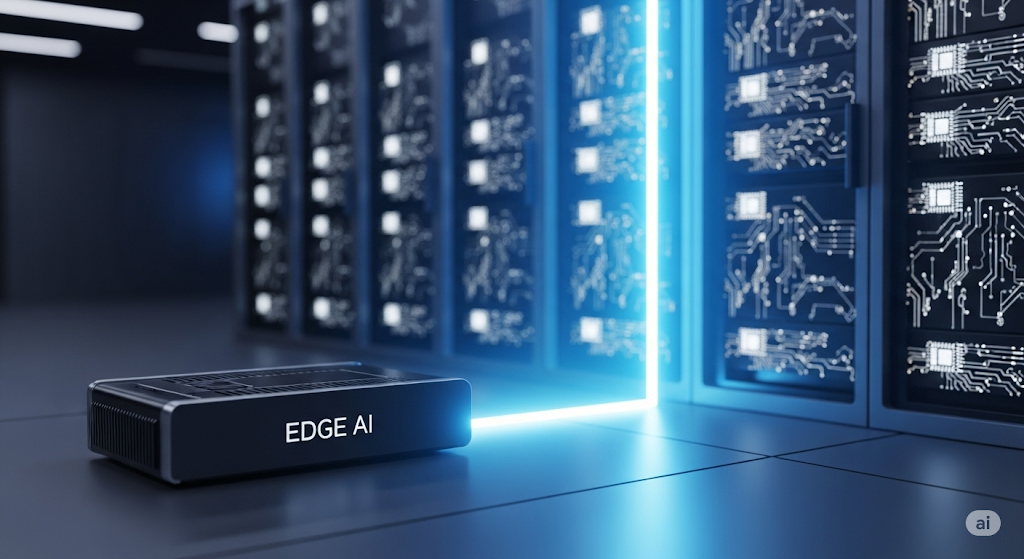
Edge AI brings artificial intelligence to the edge of the network, meaning data is processed locally on IoT devices or nearby gateways rather than relying solely on the cloud.
How it works (simple terms):
- AI models are deployed directly on edge devices (like smart cameras, sensors, or gateways).
- Data is processed instantly without always needing the internet.
- Only relevant insights (not raw data) are sent to the cloud.
✅ Best for:
- Real-time decision-making
- Low-latency applications
- Offline environments
❌ Limitations:
- Limited processing power
- Requires model optimization
Key Differences Between Edge AI and Cloud AI
| Feature | Edge AI | Cloud AI |
|---|---|---|
| Latency | Real-time, milliseconds | Higher, depends on internet |
| Data Processing | Local, on-device | Centralized, cloud servers |
| Connectivity | Works offline | Requires internet |
| Scalability | Limited to device power | Highly scalable |
| Security | Data stays local, higher privacy | More vulnerable during transmission |
| Cost | Lower bandwidth cost | Higher recurring cloud cost |
Practical Use Cases
Edge AI in IoT
Smart Cities
Traffic monitoring with real-time alerts.
Healthcare
Wearable devices that detect heart irregularities instantly.
Manufacturing
Predictive maintenance with on-site analytics.
Cloud AI in IoT
Retail
Centralized customer behavior analysis.
Smart Homes
Cloud-based voice assistants like Alexa/Google Assistant.
Logistics
Fleet management and route optimization.
Hybrid Approach: Edge-to-Cloud AI
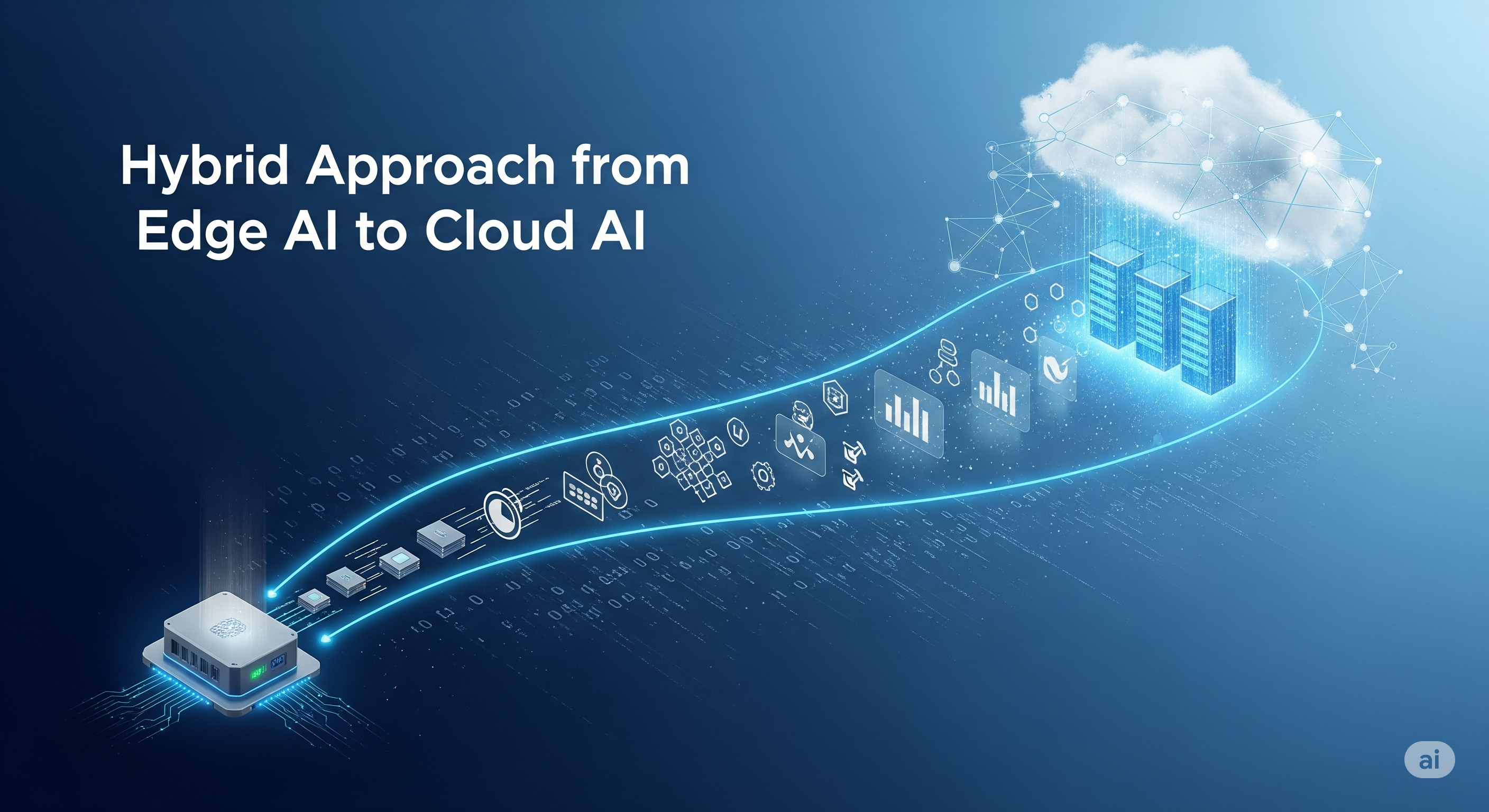
Many successful IoT projects combine Edge AI and Cloud AI.
- Edge AI handles instant decisions.
- Cloud AI manages big-picture insights and model training.
🔗 Example: A smart camera detecting intrusions locally (Edge AI) while sending overall usage data to the cloud for long-term analytics.
How to Choose for Your IoT Project
Real-Time Needs:
If you need instant response (like safety monitoring) → Go for Edge AI.
Scalability & Data Insights:
If your project requires large-scale data analysis → Choose Cloud AI.
Connectivity Constraints:
If devices operate in remote/offline areas → Edge AI is essential.
Budget Considerations:
Edge AI reduces bandwidth costs. Cloud AI may require higher ongoing cloud expenses.
Conclusion
Both Edge AI and Cloud AI play vital roles in IoT development. The best choice depends on your project's real-time requirements, scalability, and budget. For many businesses, a hybrid Edge-to-Cloud AI approach delivers the best results.
Ready to bring AI into your IoT project?
Contact Sieora today to build intelligent, future-ready solutions.
Get Started Today 🚀