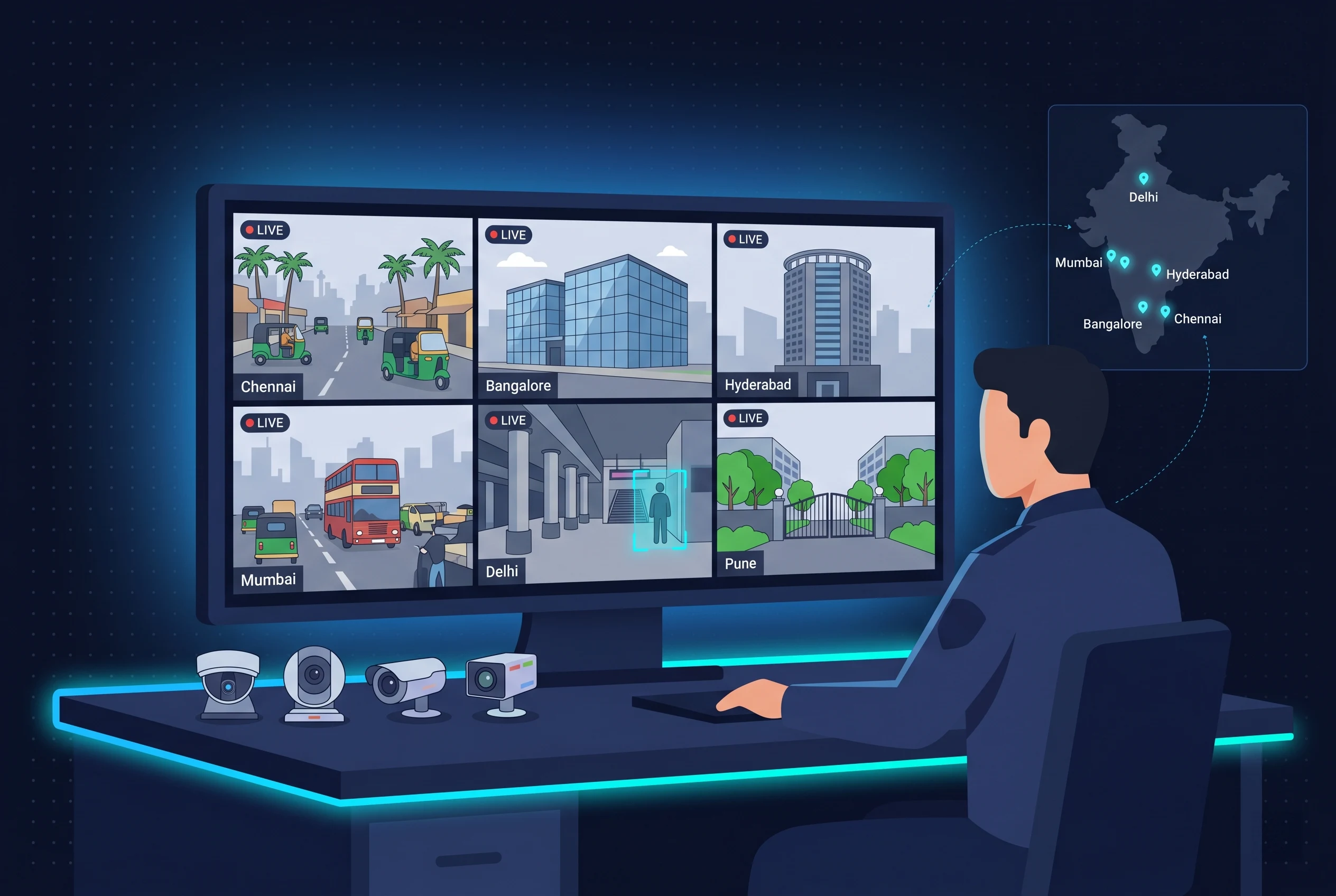
Every second, your cameras capture thousands of events across your facilities. Most organisations can only replay footage after an incident. Sieora's video management system changes that — giving security teams across India a single intelligent command centre for every camera, site, and alert in their network.
Trusted by enterprises across India
Video management software (VMS) connects, controls, and analyses footage from IP cameras, CCTV systems, and surveillance devices across one or more locations — giving operators a unified dashboard to monitor live feeds, review recordings, receive AI alerts, and manage user access.
Modern platforms go far beyond basic recording. Today's solutions layer AI video analytics on top of raw footage — enabling automatic detection of perimeter breaches, crowd anomalies, licence plate recognition, fire and smoke detection, and dozens of real-time events without constant human observation.
| Capability | NVR (hardware) | Sieora VMS |
|---|---|---|
| Deployment | On-device only | ✓ On-premise, cloud, or hybrid |
| Scalability | Fixed camera limit | ✓ Unlimited cameras & sites |
| AI analytics | ✗ Basic or none | ✓ 100+ AI-powered use cases |
| Integrations | Limited | ✓ Open API, 50+ integrations |
| Flexibility | Low | ✓ High — software-defined |
Choose your deployment model
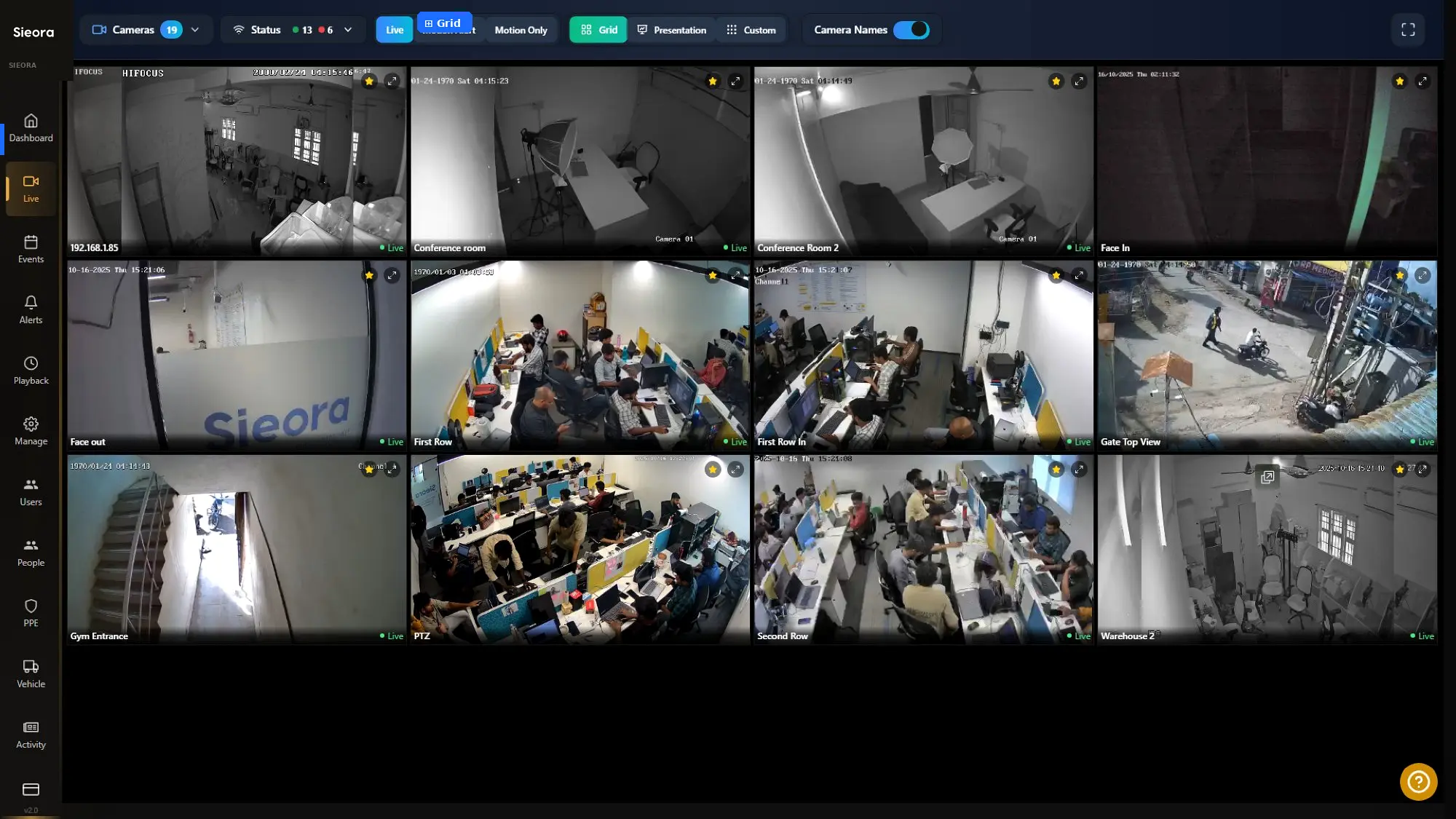
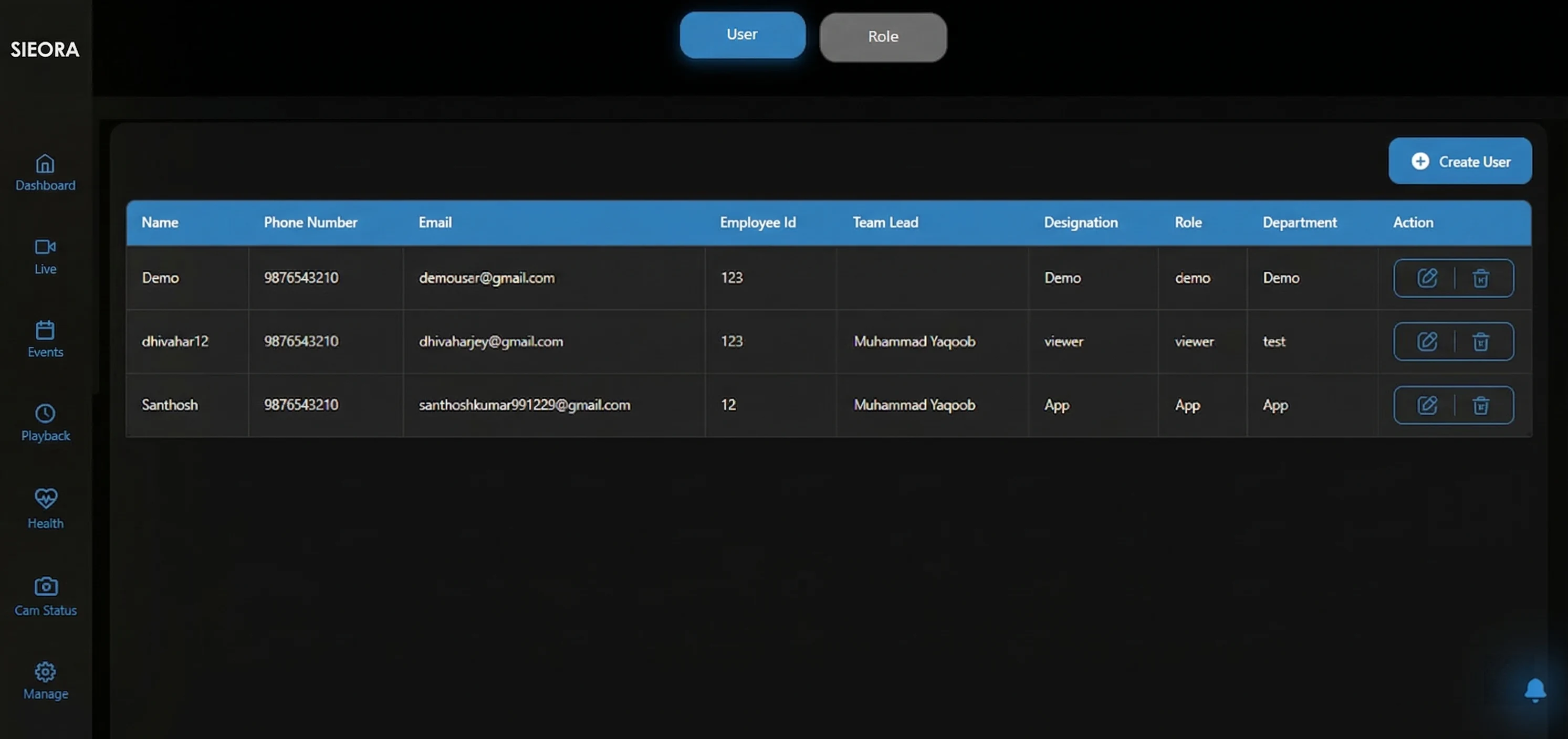
View hundreds of camera feeds simultaneously on customisable multi-screen layouts. Switch between sites, zoom PTZ cameras, and manage from desktop, browser, or mobile.
Over 100 pre-built AI analytics use cases, each optimised for specific deployment scenarios. Intelligence runs natively — no separate analytics server required.
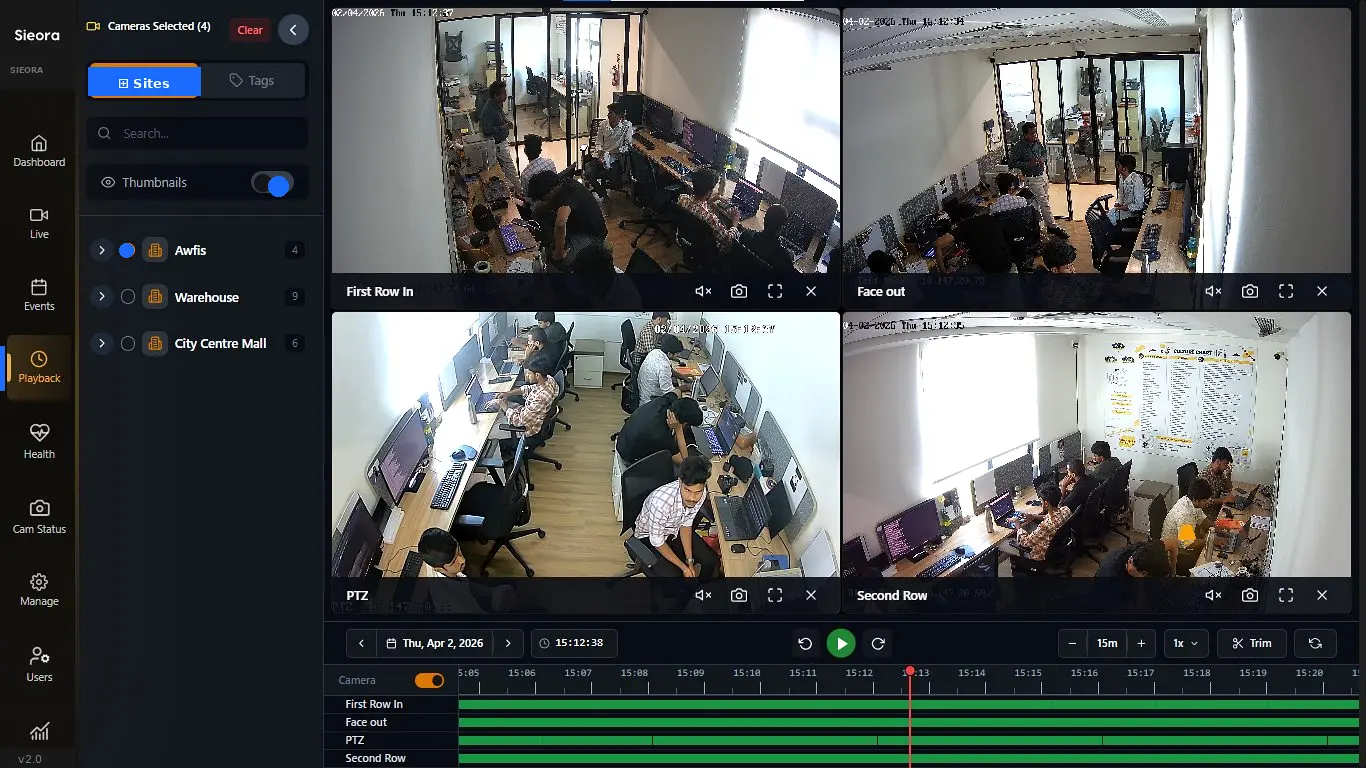
Event-driven recording activates only when something happens — reducing storage costs while improving incident retrieval speed dramatically.
Every user sees exactly what they need and nothing more — from frontline operators to IT administrators.
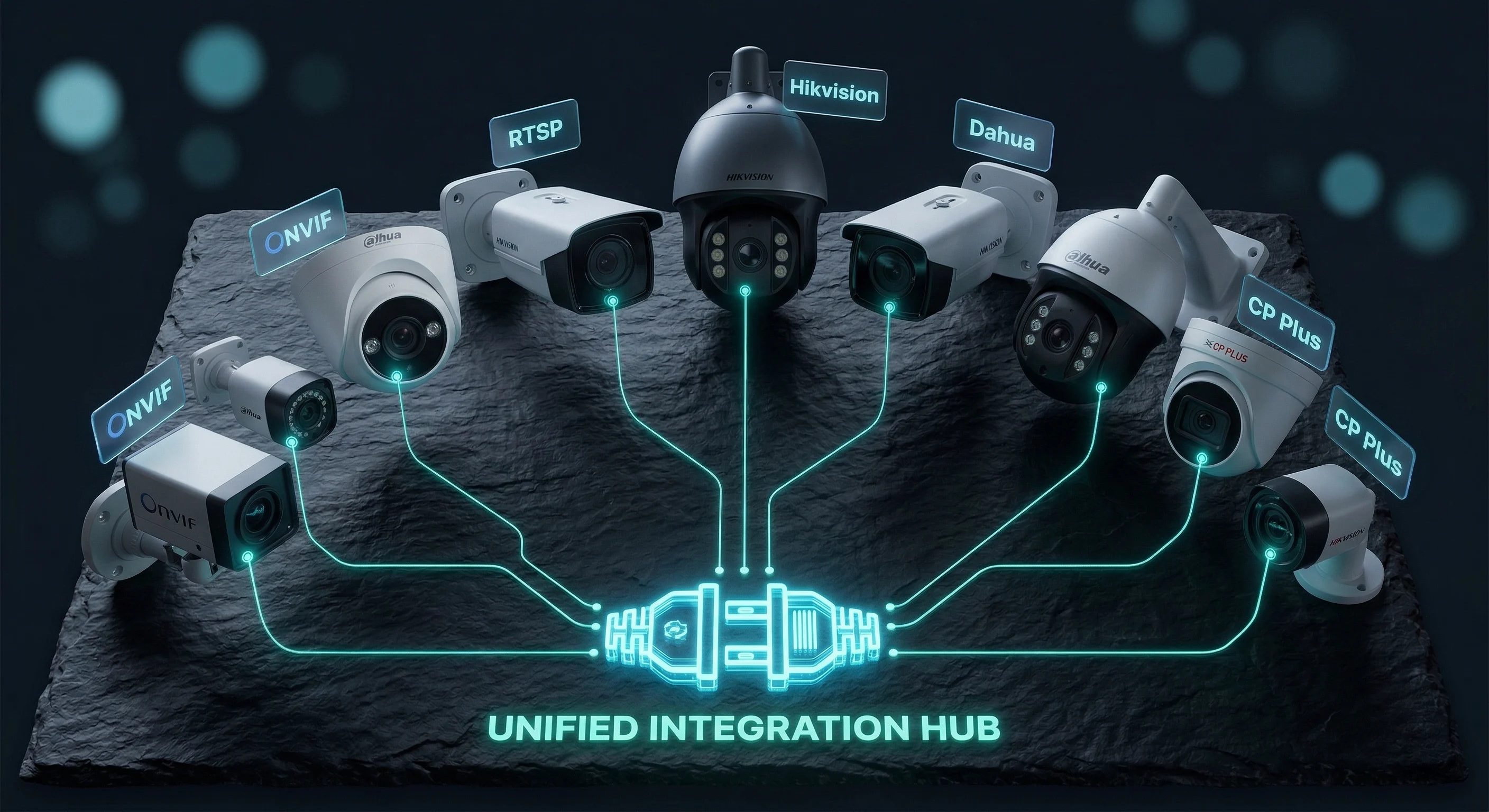
Hardware-agnostic and ONVIF-compliant, supporting IP cameras and encoders from 50+ manufacturers with open API architecture.
When your surveillance system is itself a potential attack surface, security architecture is a foundation — not a feature.
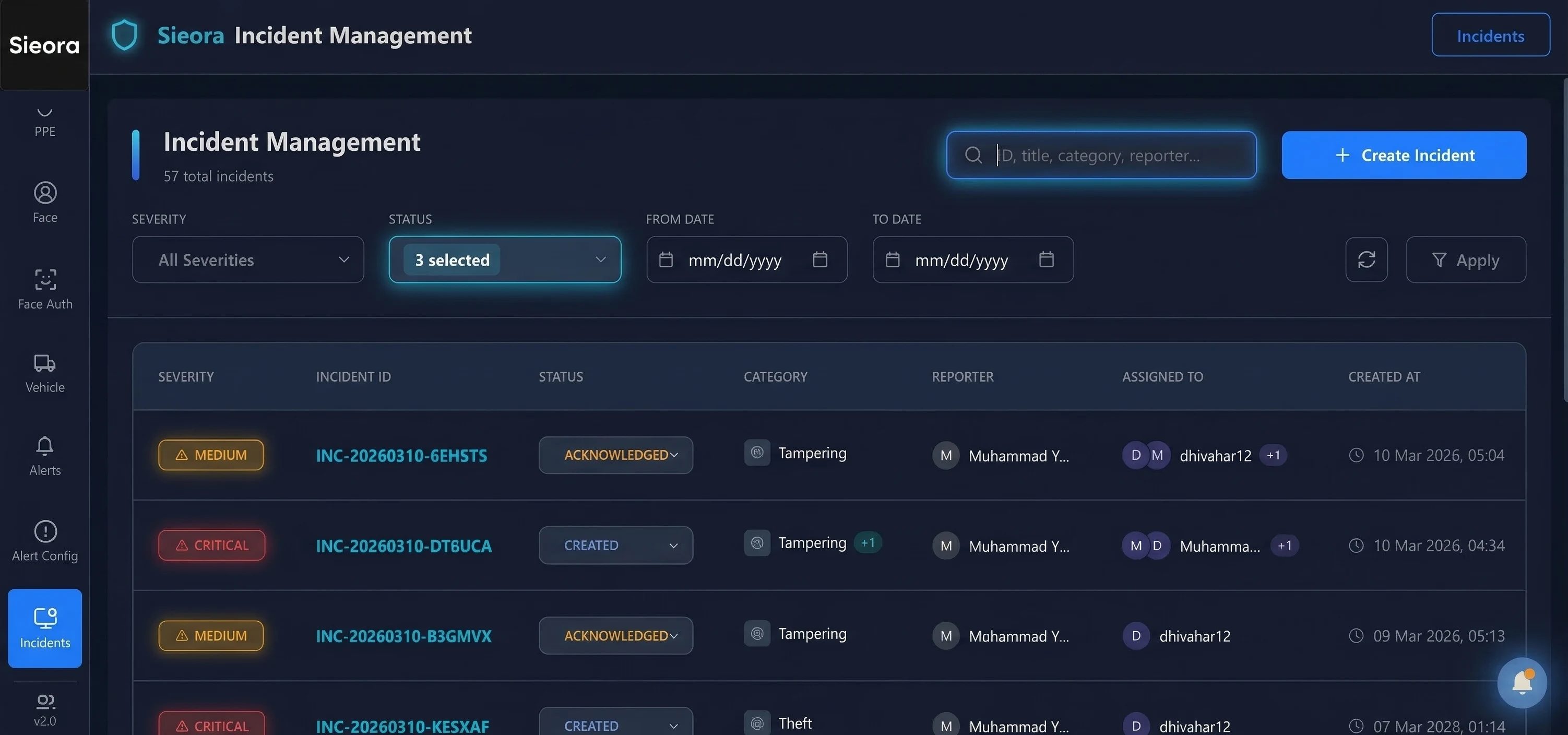
Every screen is built for operators who need to act fast — not analysts who review footage days later.
The same platform powers radically different environments — adapting to the specific demands of each sector.
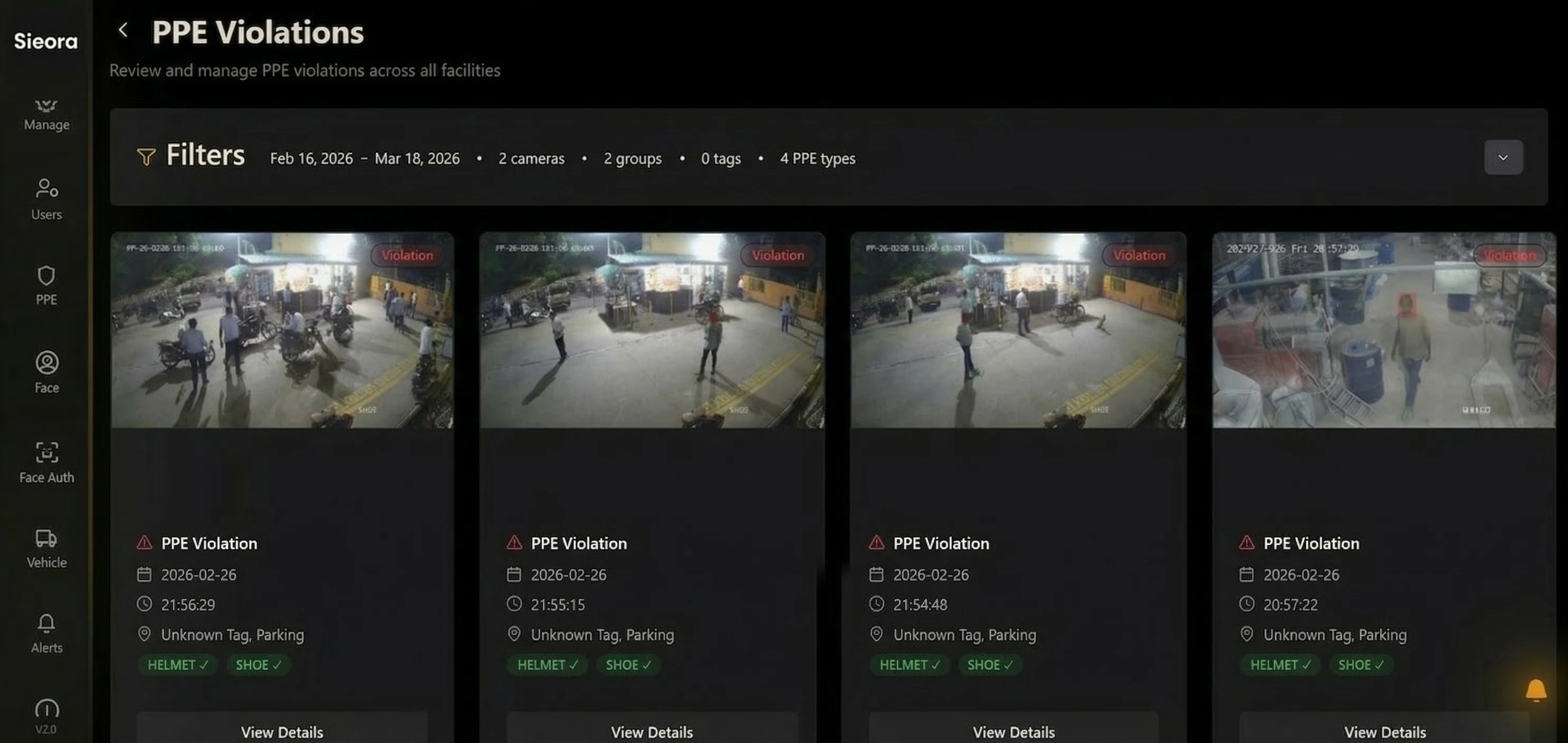
Monitors production floor access, detects PPE violations, tracks movement in hazardous zones, and integrates with SCADA systems — converting cameras into safety sensors.
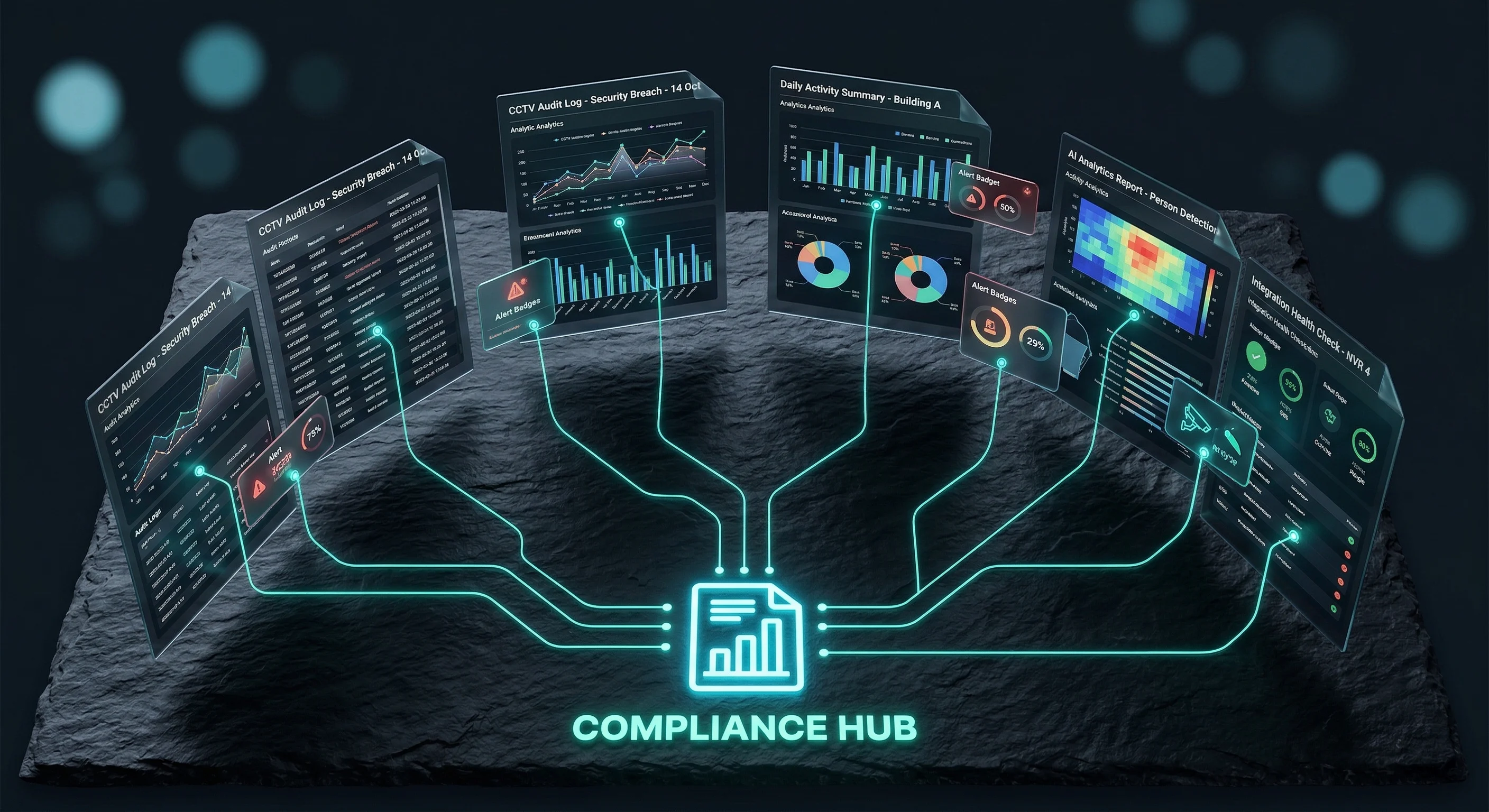
Court-admissible footage, encrypted video archiving, granular user access logs, and forensic investigation tools across hundreds of branches.
Monitor perimeters, manage visitor access, respond to incidents, and coordinate with law enforcement — while keeping student privacy protections firmly in place.
City-scale microservices architecture scales to unlimited cameras with map visualisation, traffic management integration, and multi-agency command centre access.
Beyond security — retail analytics for footfall, queue length, dwell time, and customer behaviour intelligence that drives merchandising decisions.
Meets the highest cybersecurity bars for critical infrastructure — VAPT certified, encrypted, and compliant with government data sovereignty requirements.
Ranked by Omdia — the only analyst-validated leadership position in the Indian market.
Scale from 8 cameras to 80,000 without re-architecting — each component scales independently.
OWASP-certified, VAPT-tested, TLS 1.3 — meets the bar for critical infrastructure deployments.
Field-tested with cameras, access control, fire, and BMS systems from leading manufacturers.
No third-party AI licence required. Analytics across law enforcement, retail, industrial, and urban domains.
Works across Windows, Linux, macOS, and all major virtualisation platforms. No proprietary hardware.
Built-in messaging, screen monitoring, and live event sharing for coordinated multi-operator responses.
Start on-premise and migrate to cloud without replacing cameras or re-training staff.
Works with cameras from 50+ manufacturers
Buying a VMS defines how your entire surveillance infrastructure performs for the next 5–10 years. Here are the criteria that matter most.
Understand your current camera count and where you'll be in three years. Some platforms cap at a few hundred cameras per server. Others, built on microservices, scale to tens of thousands across unlimited sites by adding computing nodes — no reconfiguration needed.
Evaluate whether analytics are native to the platform or require costly third-party add-ons. Check if the AI engine is customisable for your scenarios, or limited to a fixed catalogue that can't be retrained on your footage.
Vendor lock-in is one of the most expensive mistakes in surveillance. Choose ONVIF-compliant software that supports cameras from multiple manufacturers — protecting your investment as camera technology evolves.
Ask for VAPT certification results, confirm TLS 1.3 support, and verify end-to-end stream encryption. A surveillance system that can be hacked gives attackers a window into your most sensitive physical spaces.
Factor in hardware (or cloud storage), integration work, annual maintenance, and upgrade licences over a five-year horizon. A higher licence cost can easily be offset by lower infrastructure costs and avoided integration expenses.
Trusted by enterprises across Chennai, Mumbai, Bengaluru, Delhi, Hyderabad, and Pune — Sieora is the video management system built for Indian regulatory requirements, Indian infrastructure, and Indian scale. From DPDP Act 2023 compliance to ONVIF support for every major camera brand sold in India, our platform is designed for the Indian market from the ground up.
Sieora's video management system is available in two deployment models. Choose what fits your data, compliance, and infrastructure requirements.
Tell us about your cameras, sites, and compliance requirements. Our team will respond within 4 hours with a tailored recommendation.